
From Parklane Landscapes
Shifting Baseline Syndrome (SBS) is what happens when we forget how vibrant the natural world used to be. Each generation grows up with a more depleted environment and calls it “normal,” simply because it’s all they’ve ever known.
Think about walking through a park and thinking, “This seems healthy.” But maybe 30 years ago that same park had twice as many birds, wildflowers, or insects. If you never saw that version, you don’t feel the loss - and that quiet forgetting becomes the new baseline. Over time, we start accepting degraded ecosystems as normal.
Researchers warn that this shift lowers our expectations, increases our tolerance for decline, and reduces our urgency to protect what’s left.
What helps:
Intergenerational conversations that reconnect us with what nature used to be.
Direct experiences with nature that sharpen our awareness of change.
Remembering (knowing) the past is the first step to restoring the future.
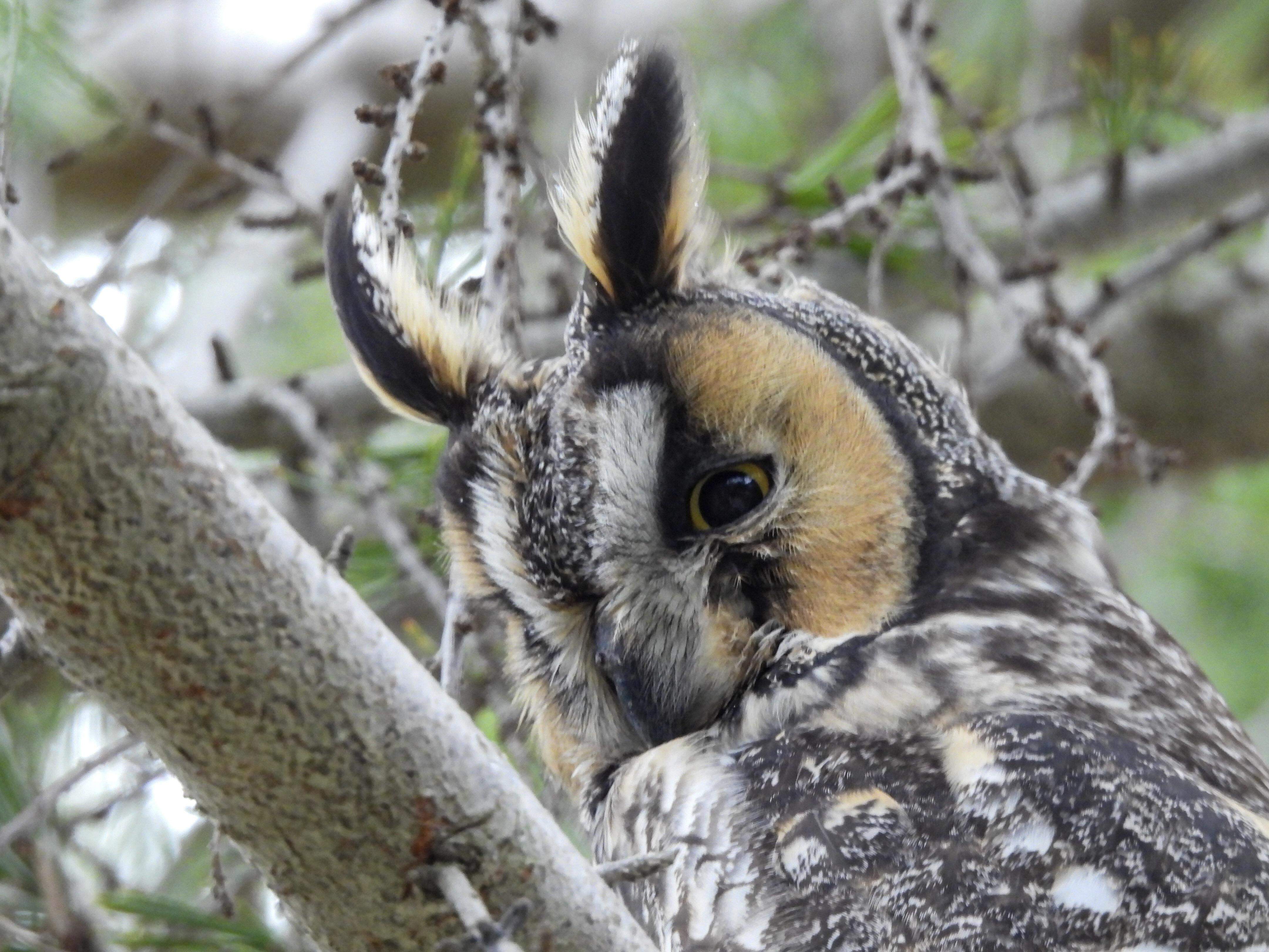
Not a sponsor, I don’t think it’s an AI graphic, and I think it has something important to say. Plus it does have an owl. We can’t save our animals if we don’t save them the spaces they need to thrive.
One of the issues with this is that the previous generation that knows this best in my country is currently the least interested in talking about climate change. My parents grew up in a noticably different climate but they don’t want to hear or say anything about this because to them confronting climate change means giving up convenience and if there’s one thing boomers hate it’s giving up convenience.
I’m only 40 years old and I remember how different it was. If you went on a weekend trip your car would be splattered with insects all over. Our garden used to be full of butterflies and other insects. I’ve been stung so many times but for my kids it’s a really rare occasion.
Not to mention the weeks of snow instead of the scattered few days we have now. And hardly anybody seems to care.
I’m around the same age and notice the same things. I miss the fireflies and butterflies so much. Even the unloved bugs are gone. In summer the car always was plastered with dead bugs, and now that doesn’t happen. A lot of notice things are gone, but even more unnoticed things are.
I feel that even though the collective “we” caused this, we as individuals have very little say on a lot of this. I can’t get Coke to stop using plastic, I can’t get Nestle to stop stealing groundwater, etc, and with decades of elected leaders letting us down, it’s hard to come up with a plan of action. Individual actions like adding native plants back into your yard (that’s what the company that shared this graphic does, which was why I was ok with sharing a business post), providing artificial animal nests and shelters, and just minding your own consumerism feels like a drop in the ocean, but I believe thousands or millions of us doing those tiny things is sadly going to be more effective in the near term than waiting for people in power to do the right thing. But it’s often times hard to convince regular people of that.
It is dejecting to realize what a small drop we are. However, I feel like all I can do is make my contribution and push aside thinking about whether I matter.
My yard was mostly invasive species when I moved into my place, and now I’ve gotten it to about 75% native species and the other 25% are not strictly native to me but I kept them because they appeared to be “bee’s choice” (rhododendrons for example). On any day in the summer I can find butterflies and bees in my yard, and I often sprinkle the seeds into the local park in the hope that the peripheries might grow wild with asters and goldenrod instead of buckthorn and dog strangling vine. Actually, I’d say the guerilla gardening has been a lot of fun - I’ve got some native black cherries in the local park that are establishing nicely and some native roses as well!
Be proud of what you’ve done! Everything you’ve done, no one else was going to do, and so the world is that much better.
Working the animal rescue makes me feel a little hopeless sometime. It takes a lot of time and energy and money to fix these guys up, and are we just releasing them to get killed by pets, hit by cars, crash into buildings, poisoned, or shot all over again? But nothing will get better if we don’t at least give fixing things an effort.
Working for a better world is never a foolish endeavor if you ask me!
That’s wonderful work that you are doing - you’re giving them a chance, even if the world they have to live in feels like it isn’t interested in them.
What are the best items to donate to animal rescues? The one near us asks for acorns in the fall, which I can usually find at that time of year. But are there any things you find are always running out?
The answer changes a bit based on what type of rescue it is. Rehabbers get licensed for different animals, and centers can specialize. Some will only do, say, bats and nothing else. Some will do any animals except rabies vectors, and other will do only rabies vectors, and so on.
The easy answer is cleaning supplies! No matter what rescue it is, we need cleaning stuff since animals are messy. Bleach, disinfecting wipes, paper towels, Dawn dish soap, laundry detergent, Simple Green, Rescue concentrate, tissues, toilet paper, trash bags. Animals make a surprising amount of laundry and dishes. This year we have started taking volunteers to purely do housekeeping. These things are great because they’re always needed, and usually pretty cheap.
If you want to purchase other things to either mail order or to buy and drop off in person, check their website or social media and they will usually share Amazon or Chewy.com or local dropoff wishlists. Here you can find more specialized things they need. Feeding tools, incubators, the right types of bird cages (we use butterfly cages since the fine mess keeps their feet, beaks, and feathers from being snagged), and wet and dry food components they need for whichever animals they care for.
For those with means, labor donations can also be great too, if you have a family business for example. We always need event sponsors, or people that can do things to keep our sites safe and operational, like tree trimming was a recent thing we needed. We have a large wooded property that needs some things cut back or removed safely, and that’s a big expense, but they were looking to see if any volunteers had a connection.
And if you feel comfortable with it, cash is always appreciated. No animal rescue in the world gets public money, so everything we get comes from generosity, or the workers and volunteers pay for stuff ourselves. I don’t get paid to be there, but I have donated stuff and given what to me is a good chunk of money because I see firsthand all the good we do. Giving money lets the directors get exactly what we need when we need it. You can send gift certificates to vendors they use, like RodentPro or Chewy are usually big ones. There are just so many options.
Lol I always intend to keep replies short, but I get so few outlets to talk to people about this stuff, so I take it out on you guys! 😆
The constant drop wears away the stone. :3
You’re right- I needed the squeegee every time I got gas to clean the bugs off my windshield. Now I think I use it once per year
if there’s one thing boomers hate it’s giving up convenience
And admitting they were wrong!
Both of these also count for most people
My parents continue to try to rationalize the bonkers-ass weather we’ve been having every year.
I try to explain some concepts to them, like artic jets that cause flash freezes in otherwise mild winters, or the unseasonably warm weather we have throughout most of the winter, or the rarity of snowfall we’ve had over the past few years. Even ten or twenty years ago, it wasn’t like this.
And yet whenever I try explaining these things, I can practically see the layers of cognitive dissonance they’re spinning it through in their heads before they give a non-committal “yeah” in one of those insincere “everything is fine because I wasn’t actually paying attention” sort of ways…
I know exactly what you’re talking about. After dismantling all their bogus arguments it’s just this empty look on their faces for a brief moment and then they push it all away again and continue as usual.
I had a dream last night where a family member asked who I think should be the next president and I started listing a bunch of progressives, so they said “whoa whoa whoa, let’s keep politics out of this.”
It was just a dream, but it was incredibly salient. Well played, subconscious.
I saw a post recently about how butterflies are always drawn like that, wings spread all the way out. That’s only for dead/preserved specimens, in nature their wings are much more overlapped and I can’t stop thinking about it
Most animals are drawn in a way that the viewer can identify them.
It’s not a realistic image.
See stick figures. Most people just never go beyond that in their drawing skills.
As long as a picture conveys its intended message, I call it a success!
Wouldn’t change anything!
Interesting observation. Often one of the best times to spot and identify butterflies is really in the morning before they’ve warmed up and are basking in the sun with their wings wide open. I don’t think it’s unreasonable for people to draw butterflies as they’re most easily seen.
It has to do when they are for collectors they pull the wings up over the head, where naturally the wings dont usually extend above the head
Ahh! Gotcha. That context makes more sense, thanks
Yeah I didn’t explain that very well

VS

Ah, the delights of living on TERF island. I know what you mean, but the images aren’t viewable for me.
Catbox didn’t seem to work but switched to imgur for a ninja edit. Maybe imgbb!
imgbb
 VS
VS

Having spent so much time looking at owls now, probably 90% of owl drawings I see have the feet drawn in really silly ways. They’re not always impossible ways for them to have their toes, but how they actually need to use them to hunt or to distribute their body weight is just not often depicted correctly. I think it’s because most depictions fail to capture the correct ratio of foot:body and it doesn’t look right (because it isn’t), so they stick the outer toes in places they don’t belong to fill that space.
The butterfly is probably the same way. We’ve seen that incorrect image displayed so much that the falsehood has replaced the truth for many of us. Even after we’re shown it’s incorrect, we often can have trouble reconciling it with years of having it ingrained the other way.
I agree, another example that comes to mind was this initiative by Matt Parker to change the sign for a football (or soccer ball for my US homies) to an actually accurate football. The representation now was geometrically impossible but the UK basically said “it’s a depiction that gets the point across and people are used to it, we won’t change it”
As soon as I saw the sign in question, I started counting the sides to see if that’s what it was. I don’t know squat about soccer, but even I knew the ball didn’t look right and should be pentagons and hexagons. You would think someone in the production chain would have caught it…
deleted by creator
I grew up in the 70s and 80s in the US. It is so much better now.
- Deer were almost extinct in big parts the Midwest
- Raptors were extremely rare
- There weren’t Apex predators like mountain lions, cougars, or bobcats like there are now
- There are so many more birds than when I was a kid
All this nihilism makes everybody feel hopeless. Meanwhile, people have been working towards improving the environment and there have been real payoffs.
Not that we’re done, but the efforts we’ve made have had real tangible changes for the positive.
The impact that Ducks Unlimited made just can’t be overstated.
There have been and will be tremendous wins, and this isn’t intended as doomerism, so I hope that is clear. Almost everything I share is intended to inspire people that they can make a difference.
While many of us are doing our part to save things and help others recover, there are still tons of pressure to open preserve to mining or drilling or timber, efforts to roll back protections of waterways, and multiple other efforts to turn nature into cash and resources.
I just saw this post and it reminded me of all the times we discuss the Overton Window in politics, and this felt similar to how people can see our ecosystems. I really only expect this to get like 30 upvotes, but people have really taken an interest to it.
So did I. And I remember having to wash the bugs off the windshield at every stop for gas. I’ve seen the ecosystem on my front porch collapse in the last 5 years. And I have the healthiest yard on the block, maybe the entire hood.
Neonics are having a huge negative impact on arthropods for sure.
I’m afraid with what is happening to the fertilizer value chain by this stupid stupid war, that isn’t going to change.
Because we are going to need every calorie we can get in the next few years.
I kinda get the point, but why stop in the 1800’s
360 million years ago:

Things were much better back in my day. Everything went to hell around the Triassic. You kids wouldn’t know, with your phones and your tablets and opposable thumbs.
EDIT: That was a good read btw
I feel as guilty as the next human for things out of my hands, but even I won’t take blame for what happened before an apocalyptic meteor strike! 😜
Neat article though! I love the Devonian.
Look what they took from us.
You see numbers like population reduced by 90% in the last x years. What’s often forgotten that it was already reduced by 90% earlier, so actually only 1% is left. As illustrated here.
Yup, it’s easy to not notice that when people present stats in a way to be misleading.
One of the reasons is the trend of a boring, uniform yard. I remember growing up we had honey suckles, various plants and such in the yard, some were not pleasant to step on but had bio diversity. With the drive of a “perfect” lawn and the use of so many chemicals including pesticides and removal of native flora as well as trees, this has decreased bio-diversity. I hate lawns, I’d rather have natural grasses and shrubs and such.
Then people tell me “well you have to tend to those and it’s a lot of work.” No you don’t, you tend to them because you’re keeping up with the neighbors. Let them grow, water them when conditions require, clean up leaves in autumn. There’s no need to modify plants for aesthetics, that’s not what I’m interested in.
Or, leave the leaves, and have beautiful lightning bugs in the summer
Are leaves good to leave for the health of the ecology? If so, for certain!

Insects and other invertabrates use them as a snow/wind barrier to keep themselves an/or their eggs and larvae safe through the winter. It should be a near endless resource for them, but if we remove them, we take their shelter and babies away.
They’re great! Plrnty of bugs like moths and butterflies nest in ground coverage so leaves are super important. Thats why you shouldnt mow or move them
Good to know, thank you!
I mean nature worked great without any interference of us. Just doing nothing will likely be better than doing anything. Though with this acceleration of warming, watering and looking for plants that are proof for a different climate will likely be necessary.
Native plants should also be less upkeep by virtue of being native. They have developed to thrive in that environment. They’ve developed resistance to local bugs, and the local rainfall and temperature cycle.
I’ve met some people that say they enjoy yardwork, but that sure isn’t me! I’d rather see cool spiders, dragonflies, bees, and butterflies. And with local wildflowers, it’s something unique to where you live, I’d think people would enjoy that.
Grass is just another chore to me.
Only thing I don’t enjoy is ticks. I trim and spray cause of those suckers.
I do hate those little buggers. The lack of extended cold winters has made them increasingly bad here. I’ll treat myself with bug killer before I’d voluntarily blast a whole area though. I love my spiders and other useful critters too much.
Keeping the area of grass you play in trimmed short and clear is usually enough to keep the ticks at bay without spraying.
I like to ask people i meet IRL if they have a lawn. Follow up question is why then?
A lot of people seem to be unaware of the history and origin of lawns. Put oversimply, they are and have always been about gross excess resources expenditure to show those around you how rich you are.
No do not clean up your leaves. Baby bugs use the leaves to keep warm in the winter. Cleaning up the leaves is reducing the population of helpful bugs.
I just want bees back. My town used to have bees everywhere you looked and you could plant anything and you would get to harvest it later. Now you are lucky if you get a couple fruit/veggies per plant. Its not just bees either. The standard ‘plant this to attract pollenators’ plants don’t help if there are no pollenators to attract.
I just happened to step outside late one night as the mosquito truck rolled by, with a dopey sounding single stroke engine pumping out a cloud of spray.
It works, we don’t have any skeeters in our neighborhood. We also don’t have lightning bugs, labybugs, dragonflies, butterflies, bees, or most other flying critters. We do have wasps, though. Those bastards are indestructible apparently.
I was in Queens, NY, in THE city, no woods, pastures, or even parks around anywhere nearby, and yet there were lightning bugs everywhere we went at night. We can’t have them where we live next to nature, but they have them in the city, because they don’t spray clouds of POISON down their streets, “for the bugs.”
I mentioned this to group of residents recently, and we all agreed said that we’d be happy to trade a few skeeter bites each summer if it meant we could see lightning bugs and butterflies again.
I mentioned this to group of residents recently, and we all agreed said that we’d be happy to trade a few skeeter bites each summer if it meant we could see lightning bugs and butterflies again.
Bring it up at a City Council meeting or something if possible. Local politics is one of the few areas in America where democracy isn’t entirely dead yet.
Also when it comes specifically to lightning bugs / lanternflies / fireflies (plus many other species), light pollution also has a significant negative effect on them. Clouds of poison sure aren’t doing them any favor either though.
Local politics is one of the few areas in America where democracy isn’t entirely dead yet.
laughs in southern US
…yeah my condolences
I was going to speak to the HOA, but it turns out its a county thing, and HOA couldn’t stop it if they wanted to. I could try to go to the county commissioners, but it’s highly MAGA, so if they figure out we’re concerned about it, especially if they think we’re concerned about the environment, they’ll probably double the coverage.
what the actual fuck? fumigating… outside? who approved this. That’s one of the most idiotic ideas I’ve heard.
There have been skeeter trucks for decades, all my life. In areas with lots of skeeters, there is a fear of skeeter spread blood diseases, so control is considered imperative.
Same here.
We used to get crop dust planes every so often in the nearby fields. I was biking by yesterday and keep having to brush off ladybugs (at 30kph) progress!
I remember the fireflies in late summer outside the cities. They are nowhere to be found anymore, unfortunately.
When I was a kid we’d visit my great grandparents in Speedway, IN, right down the street from the Indy 500. There were so many fireflies even us uncoordinated kids could fill a jar catching them by hand.
So you’re saying my brown thumb is not totally my fault??? 😉
The wife is terrified of bees, but I get excited to see them anymore. Especially the weird local bees.
I tried to plant some bee and butterfly friendly plants but they all got cooked in a heat wave last year or something.
We also say that the bugs and animals all only ever came by to see grandpa and now that he’s gone they have no reason to visit.
But yeah heat waves have been really awful. I’m already dying and its not even the hot season. Soon all we’ll have that can handle the heat is cockroaches and we’ll have to selectively breed them to turn them into pollenators but actually that would be horrendous please no.
We also say that the bugs and animals all only ever came by to see grandpa and now that he’s gone they have no reason to visit.
🥲
I just got the email today about electricity prices jumping another 30% right in time for summer. We’ve already had 90 degree (32C) days, so I am not looking forward to this. I am one of those always hot people as it is. 🥵
Weird question, not a dig, in Southern France they have metal or wooden shutters on all the windows. Is that something they have in the south of US? It makes a massive difference and takes zero electricity, then you just need an AC in your bedroom to go to sleep. Probably doesn’t work as well on wood houses that trap the heat and heat quickly though?
No, shutters are usually fake molded vinyl things that don’t move, at least on most houses made after 1900. At best we have interior blinds or heavy blackout curtains.
Am feel like I’m going to regret it but: what is it like when it is not the best?
Bare naked windows or just light curtains.
Someone once shared a video showing the fancy exterior shutters they have in Germany and I was very jealous.
I saw a number of explanations why we don’t use real shutters, and probably the popularity of air conditioning, especially central AC compared to Europe from what I understand, is why ours are purely decorative nowadays.
In every part of France actually. It really weird me out when I learn that it is was not standard in the USA. It is not like the purpose is not obvious. Would people live in houses without glass panel on the window as if they are “not that important”?!
Nope! It could also be the fault of J(erk) B(ee) V(ance) so don’t forget to orange that sumbitch too
I mean, there’s other solutions

What’s the fish doin’.
Flying of course!
Not to be confused with fly fishing.
LOL it took me so long to spot that since I kept looking at the only bubble with water in it! I was wondering how bad are my eyes? 😅
Making me wonder if this was AI generated.
I think one of the easiest ways to “reset” your baseline is to visit old growth/native forests. Those are some of the few untouched areas left and shows you what the land used to be like before we depleted everything.
That’s getting harder and harder to do for a lot of people. 🥺
It’s one of the reason I try to represent a lot of more rare and exotic owls here. A lot of stuff we will never have the opportunity to see, especially in person, so I want to at least make people see what needs protecting. I think that’s why well-run zoos and animal education centers are so important. It’s near impossible to get people to care about things that they don’t know even exist.
There were a lot of places in the world that went in reverse from this scene. Managed/coppiced woodlands date to the Middle Ages, and resemble the first picture much more than the third.
I would also point out that there are plenty of completely natural areas that have resembled the first picture since time immemorial. Savannahs, scrublands, steppes, and prairies are naturally sparse in terms of large vegetation, due to the grazing of large herds of ungulates. These voracious herbivores rapidly destroy young trees, leaving wide gaps between the larger trees that have beat the odds to reach the critical size needed to survive.
In North America, the disappearance of bison (due to European settlers’ destruction of their populations) has led to woody forest encroachment on areas that were previously prairie grasslands with no trees. So in that case the whole progression shown in these pictures is running in reverse.
In my lifetime – and even more so in Sir David’s – the natural world has suffered an extraordinary and devastating decline. Since the spread of industrial agriculture, the planet has lost more than two-thirds of its wildlife populations. Today, 96 per cent of all mammal biomass on Earth is made up of humans and farmed animals. Just four per cent is wild.
At COP26, he ended his address with words that deserve to be remembered: “If working apart we are a force powerful enough to destabilise our planet, surely working together we are powerful enough to save it… In my lifetime I’ve witnessed a terrible decline. In yours, you could – and should – witness a wonderful recovery.”
It would become a very long cartoon if we included everywhere. 😁
Wherever the environment changes, it benefits some organisms at the cost of others. The Northern Spotted Owl vs Barred Owl situation has really highlighted that here.
Like you said, nature itself is always changing, and things will adapt or fall off to accommodate the new reality. A healthy and natural ecosystem doesn’t need to look like the picture, it just tried to highlight how we can lose an understanding of how things could or should be over generations.
Yeah, my purpose is not to suggest that we haven’t affected the environment; we have, dramatically. It’s just to say that there is way more than 1 kind of natural state.
We haven’t even gotten into the ways many other animals shape environments. Ungulates can destroy trees, yes, and wolves can limit ungulate populations, so more wolves tend to lead to thickets, whereas more ungulates lead to more clearings.
Beavers are another shaper of habitats, by their damming of rivers, creation of lakes, and the silt deposits in those flood plains which can lead to the ecological succession of forests.

My mom sent me this today, looks like they got a beaver! 🦫
I highly suggest people listen to this song about the birth of the conservation movement of you ever need a little hope.
They mentioned the diamondback terrapin! She’s been one of my fav animals this season!
Sadie Sink

That is so cool! I hope your mom and the beaver are able to keep the peace. I know some folks get really frustrated by them!
Yeah, she’ll figure it out haha. Probably will need to wrap some trees but that’s ok.
I guess you just wrap them in hardware cloth?
That was a long song! If it’s too long for anyone, there is a transcript, but of course you don’t get the music part, which did set a good mood for the story.
It doesn’t sound like Hornaday enjoyed certain people as much as he came to enjoy animals, so you may want to skip his wikipedia page, just as a heads up.
I found the storytelling very inspiring though!
Someone recently recommended to me The Dollop #386 - The War on Squirrels. While many of us in the US still see lots of squirrels, there used to be so many the government paid a cash bounty on them. Some real crazy stuff in there, and a strange history I’d never heard. Look it up on your podcast platform of choice.
In apology for our country’s former squirrel hatred, here is one of my squirrels drinking upside down.

Ah, I got ya now. The balance of creatures can certainly affect the ecosystem more than many will give them credit for.
We’re raising funds to build a new beaver pen, so I’m hoping I’ll get to know those guys better soon. They look like loads of fun.
what happened to the fireflies
I hear everyone getting rid of all the fallen leaves is a big reason fireflies aren’t as common anymore. The leaves provide food, moisture, and shelter for the fireflies for the 2 years before they get wings. So when people collect all the leaves off the ground, they get rid of all the things that keep them alive.
I’ve heard that too. Whatever it is needs to stop.
1800 reminds me of

The first game literally made by furries and featured many old school furry artists. Some of which have died or are dying now.
The plastic bag really ties it together, and strangles you.
I feel even that fits, as it’s one bag today, but if no one feels the need to pick up a bag that isn’t theirs, maybe tomorrow 2 bags is normal…
Oh it fits. You see them everywhere. Up in tree’s at random.
In the US there are more trees now than in 1950. We basically clearcut the country except some in the Pacific Northwest during the 1800’s - early 1900’s westward expansion. More plastic as well though.
There are some caveats to consider here. When is a tree not a tree? When it’s not the right tree.
Old growth diverse forest is not the same as a monoculture tree farm. Let’s look at both sides of this claim.
From NELMA%20of%20forest%20products.) (Northeastern Lumber Manufacturers Assoc)
Let’s back up for a minute. Prior to the arrival of European-Americans, about half of what is now known as the continental United States consisted of forest. From about 1620 to the dawn of the 20th century, millions of acres of forests were cleared to cultivate land and build structures. But initiatives to preserve forests, including reverting abandoned farm lands and developing sustainable forestry standards, have made a big impact.
We now have roughly two-thirds the amount of trees we had in the year 1600, and most of those gains have been concentrated along the Eastern coast, where the majority of the losses occurred in the first place. In fact, average wood-per-acre volumes have almost doubled since the 1950s. The United States has more trees today than we had 100 years ago (and a global study even found that the number of trees on Earth is around 3.04 trillion, a much higher number than previously believed.)
The United States is the world’s largest consumer (and second largest producer, after Canada) of forest products. While wood was once harvested mostly from federal lands, a shift to private lands has helped preserve vast areas of forest for public benefit while also encouraging landowners to keep forests intact. Responsible logging practices ensure that forests managed for the production of wood products contribute to healthy ecosystems while maintaining a steady supply.
So we have acknowledgment we’ve cleared a tooooon of our trees. The eastern US does have a bunch of trees today though, but as stated, these are new trees. Biodiversity is not specified here, so we’ll ignore that right now. They also state demand for timber and wood products is higher than ever. But we’re close to replacing what we take. One tree in exchange for one tree, so we’re cool, right?
Scientists at the University of Maryland analysed satellite pictures showing how the use of land on Planet Earth has altered over a 35-year period. The study, published in Nature journal, is the largest of its kind ever conducted.
The research suggests an area covering 2.24 million square kilometers - roughly the combined land surface of Texas and Alaska, two sizeable US states - has been added to global tree cover since 1982. This equates to 7% of the Earth’s surface covered by new trees.
But what may sound like good news for the planet actually represents mixed news for the environment.
skipping some stuff
However, an important distinction needs to be made between tree cover and forest cover.
The study points out that industrial timber plantations, mature oil palm estates and other specifically planted forests add to global tree cover. On paper these areas compensate for the primary forest that has been cut down; 100-hectare loss of primary forest is perfectly offset by a 100-hectare gain on a man-made plantation, for example.
But while they may be equal in area, they are not equal in biodiversity. Primary tropical forests and savannas harbour a wealth of flora and fauna which is lost when these areas are cleared.
And man-made forests do not compensate for the damage and degradation done to ecosystems through land clearance.
skipping stuff

So while trees are being replaced, there is damage to more of the environment than just to the trees. Every plant or animal that needed those trees to survive many no longer be able to return.
The trees may not be of the same species that was removed. They may be trees not native to that area and not suited to support local wildlife. They may not even have been replanted on the same continent.
Young trees cant support cavity nesters like owls, and dont harbor the insect life without cracked and weathered bark, and birds like woodpeckers that would eat those insects are out of luck.
Even a planted biodiverse forest takes 100-200 years to become old growth forest. And replacing a rainforest or old growth forest with pine trees grown specifically to quickly harvest new timber is nowhere near an equivalent exchange.
I agree with all of your points. I am just pointing out that our forests in the US were nearly completely gone at one point and the graphic doesn’t actually represent the actual conditions of the time period it is describing at least in the US.
No worries, I didn’t take it as you denying anything. People have done much to make things better, but this is another case where the battle is never really over.
I thought this would just be a quick post that would get about 30 likes, but this has really blown up. Which is great, I love all the chat this is generating, but if I had expected such a reaction, I could have found a better visualisation! 😅
When I learned that Michigan had at one point 10% of its trees left and those were in the UP, I was floored. The MI DNR had a good writeup of a brief history of our forests and its relation to the deer population that I read a couple years ago.
Very nice! I just quickly browsed some of the info on michigan.gov’s website and that is a tremendous recovery! It is a crime that conservation has become a divisive issue today, when it benefits us all. I wonder which of these programs could still be pulled off today.
Imagine we had a CCC or similar that you could sign up for like the military that just does conservation and beautifying our shared lands.
I have wondered for years now why we can’t do public works programs like this anymore. If things keep regressing, we may just have them again but under less than ideal circumstances.
My work with animals has been some of the hottest, grossest, smelliest work I’ve ever done, but it’s also been the most rewarding even though working there costs me money. All my standard work labor feels like it goes off to some vaguely anonymous rich person, but the animal work lets me see those that I’m helping and the end result of my efforts and there’s no denying it makes my community a better place.
For a country that loves to tout itself as the best, we really like to let it go to shit. 🤔
Oddly there are more forests in the USA now than there were in 1950.
More individual forests, more square footage, or both?
I legitimately don’t know, I’m not asking as a gotcha
I had some good linked info in this other reply to a similar comment if you want some more info about what tree are being replaced and by what.
I don’t know about acres, but large game population (deer, bear, elk, etc…) in the US has increased several hundred percent since 1950.
I would like to see what it is from 1980 because there was a ton of effort in teh 50’s, 60’s, and 70’s to clean up the environment.