- 25 Posts
- 16 Comments



 36·3 days ago
Removed by mod
Removed by mod
Oh, another new account, just 14 days old, but permanently in defense of China.
The Brazilian government just blacklisted BYD over forced labour at BYD’s plant there. Among others, the authorities listed some details at the BYD plant in Brazil:
-
Chinese workers worked seven days a week, including public holidays.
-
Chinese workers’ passports were locked in an administrative cabinet labelled in Mandarin as “security”; some had been held since August 2024, leaving workers without access to their own travel documents on weekends and outside business hours
-
Armed private security guards enforced a lockdown, sealing the gates after dinner and forbidding workers from leaving without supervisor authorisation
-
Workers were housed in containers where beds lacked mattresses or rested on foam padding roughly three centimetres thick
-
Food was stored on the floor alongside personal belongings, with cockroaches and rats moving through sleeping areas
-
In one facility, 31 workers shared a single bathroom, forcing them to wake at 4am to queue before their 5.30am departure for the site, and the kitchen was deemed unfit for use by inspectors
-
On the construction site, there were only eight chemical toilets for the entire workforce, and workers had no sunscreen despite visible skin damage from prolonged sun exposure
-
Workers received only a nominal living allowance in Brazil, in some cases less than US$200 a month, disbursed only with supervisor approval, and investigators found that around 60% of their wages were withheld and remitted directly to accounts in China
This is by far not everything.
-
Removed by mod
In related news today:
Brazil blacklists BYD for slave labour conditions at its biggest plant outside China - (Archived link)
Brazil’s labour ministry on Tuesday added Chinese electric vehicle (EV) giant BYD … to a registry of employers found to have subjected workers to conditions analogous to slavery, limiting access to state financing and increasing reputational risks in its most important market outside China.
There is even a Wikipedia article on the BYD Brazil working conditions controversy for those interested.
It’s apparently a case Brazil has been investigating since 2024. Australian outlet ABC published an article including a short video that gives a glimpse of the conditions under which Chinese workers lived.
It’s nice that you do, but hopefully you can understand that most Westerners don’t.
This is rubbish.
In a nutshell, it’s part of anti-Western, anti-democratic propaganda that makes you believe that the Western world is a mega-monolithic self-interested superstate that lives at the expense of others. Stylized as ‘the enemy’, it is then used by dictatorships to justify the suppression and exploitation of their own peoples.
Yeah, that’s likely the single most dangerous threat imho: thinking that one is immune. Because no one is. We urgently need more education in this field I guess, and supposedly not only in Canada imo.

What you are describing has nothing to do with the forced labour system in China. The comparison is disingenuous.
And it is by far not only a “right-wing talking point” as you say, as it is exactly China that creates such a system. China’s Xi Jinping has been frequently denouncing “welfarism” as it “makes people lazy” (you’ll easily find evidence across the web).

The expected reaction. You and your sockpuppet-like accounts use this community as a dumping ground for authoritarian propaganda while attempting to insult all others in an extraordinarily primitive way.

Another cheap propaganda bs from the resident tankie troll.
This is a weird headline.
The only posse here is the series of absurdly false propaganda narratives spread by you and your ‘Canada bad, China good’ club here. The comments you made here are, again, false.
Are you aware that the source you provide contradicts your own narrartive?
The Gini Index according to the World Bank in any democratic ‘capitalist’ country is lower than in China, in many countries even by a third. And the Gini provided by the WB is even lower than China’s official index as the World Bank factors in lower prices in rural areas. This means that China’s inequality is even higher according to the Chinese government’s own data.
Could these ‘private money’ include “Common Pool Resource institutions” in the sense of Elinor Ostrom? Would that be an option for managing some of the commons in Canada?

Asleep at the Wheel: Car Companies’ Complicity in Forced Labor in China
… While the Chinese government has welcomed car companies’ investments on its own terms, it has so far shown hostility to the human rights and responsible sourcing policies many carmakers profess to apply across their businesses. Almost a tenth of the world’s aluminum, a key material for car manufacturing, is produced in the Xinjiang Uyghur Autonomous Region (Xinjiang or XUAR), a region in northwestern China, where the Chinese government is conducting a long-running campaign of repression against Uyghurs and other Turkic Muslim communities …
Despite the risk of exposure to forced labor through Xinjiang’s aluminum, some car manufacturers in China have succumbed to government pressure to apply weaker human rights and responsible sourcing standards at their Chinese joint ventures than in their global operations. Most companies have done too little to map their supply chains for aluminum parts and identify and address potential links to Xinjiang. Confronted with an opaque aluminum industry and the threat of Chinese government reprisals for investigating links to Xinjiang, carmakers in many cases remain unaware of the extent of their exposure to forced labor …
Aluminum is used in dozens of automotive parts, from engine blocks and vehicle frames to wheels and battery foils … The Chinese government has made Xinjiang a hub for heavy industry, including aluminum production, even as rights violations against Uyghurs have increased. Xinjiang’s aluminum production has grown from approximately one million tons in 2010 to six million in 2022. More than 15 percent of the aluminum produced in China, or 9 percent of global supply, now comes from the region. Xinjiang produces more aluminum than any country outside of China.
The link between Xinjiang, the aluminum industry, and forced labor is Chinese government-backed labor transfer programs, which coerce Uyghurs and members of other Turkic Muslim communities into jobs in Xinjiang and other regions …
[Emphasis mine.]
This is a report that has been cited by Margaret McCuaig-Johnston, senior fellow at the University of Ottawa, at the parliamentary committee in March, where she was then asked an aggressive set of questions by floor-crosser Michael Ma. The report makes a great read and offers insights into a decisive part of ‘China’s EV success formula’.
The next whataboutism and attempted insult.
The linked media reports also about Israel’s genocide, but this is not the topic here. This is about China’s genocide. What you are doing here discredits you. If you continue to whatabout, I end this discussion.
It is disgusting. But as we know in the meantime according to a study,
[tankies’] support can extend beyond backing these authoritarian regimes [such as in China, Russia], even cheering on their violent actions, as evidenced by their posts on the Russian invasion of Ukraine […] and exhibiting anti-Zionist and antisemitic rhetoric.
So no one is surprised I guess.
This ‘LOL’ alone is misplaced, let alone your attempt of distraction.
But to answer your question: yes, they do publish these stories. You can easily find it.
[Edit typo.]

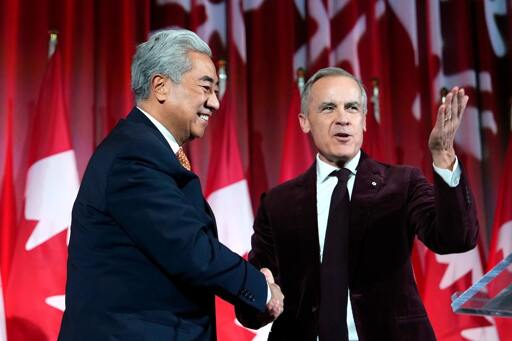
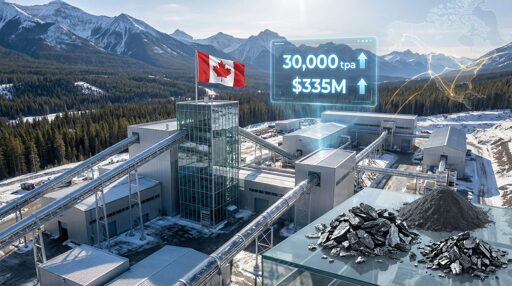

It’s at least a step in the right direction. Canada needs to diversify its trade, and Taiwan has a lot to offer. Any country, particularly a democratic one that accepts the rule of law and is, therefore, reliable, must be highly welcome.