To be fair, it wasn’t Callaway directly. It was Good Good Golf, a golf youtube channel, that aired the ad. Callaway had a partnership with them to cobrand the golf club, but dropped Good Good immediately after the ad and canceled the branded club.
Callaway still deserves the backlash from associating with them though and apparently someone giving the ok for the ad.
With economies of scale you end up with basically one producer producing stuff for incredibly cheap. Take poultry for example, Tyson is like the only name you’ll see at major retailers. Even most store brands are just relabeled Tyson product. So it really doesn’t matter to them if they get a couple people sick, cause we’re else you gunna go? Blackbird farms, and pay $38 a chicken? Not the very large majority of price sensitive people living paycheck to paycheck.
Sadly it is on brand for the US. Really trying to bring back the good ole days where the white man can do whatever with impunity. Keeping women in their place, bare foot and pregnant without means.
No, the First Amendment only protects you from the government. “Free speech” is a philosophical principle which has nothing to do with governments directly.
However, an “advertising standards board” that decides what can and cannot be posted publicly sounds pretty governmental to me.
But even when free speech wasn’t forced it wouldn’t force channels to carry your advertisement.
Of course, but that still isn’t any kind of universal standards board, that’s individual channels deciding independently.
Yes, the company that made the ad. Unless something happened that I’m not aware of, nothing has happened to the marketing firm who made the ad nor the various companies who served the ad to audiences.
The question was phrased in a way asking if an ad platform ran it across their standards and practices to see if the ad should be aired. The ad was in poor taste, but it could be shown on network television so no one stopped it. The risk for showing a controversial ad is near zero. The only company dealing with a boycott is the company that was advertising its product.
That’s not what free speech is. Free speech doesn’t let you say whatever you want to anyone, it’s intention is to protect you while speaking out against government officials and offices. Last I checked Callaway wasn’t the 4th branch of the government, let’s not give turkey neck any ideas.
The FCC should be regulating ads like this, but this is a clown country and capitalism says domestic violence is a viable commodity to sell.
While the topic was abhorrent and in bad taste, I don’t think there was ever a time when the FCC banned jokes about spouse/family abuse.
The Honeymooners regularly joked about the husband finally breaking and beating his wife. I Love Lucy had an episode where Lucy tried to get a sunburn so Ricky wouldn’t beat her as hard for buying an expensive dress. The Simpsons had Homer choking Bart as a running gag. All these shows were on Broadcast TV.
The FCC being useless and bought off still doesn’t mean that Callaway gets special first amendment protections. They’re a corporation, they aren’t protected from consumers and retailers dropping their products for promoting crimes, or from potential lawsuits as a result of harmful marketing.
Again, this topic has nothing to do with free speech.
I bring it up because companies which broadcast and publish material are generally given greater deference by the public for showing material they disagree with. As long as the standards are adhered to evenly, the broadcaster isn’t going to be boycotted for an ad. No one is boycotting the television stations and streamers for airing this ad; all the attention is going to Calloway.
The consequences of free speech are felt by those paying for it in public opinion, not those serving it.
This post is about Costco boycotting the company who commissioned and approved the ad to represent them and their products. How would you propose costco boycotts a TV network that they have no direct ties to? You do understand costco is a retail chain that sells physical products, in physical stores. They don’t operate the TV networks or manage internet personalities and their sponsors. Short of putting out broad statements claiming NBC or Fox or whoever support domestic violence (which would open them up to slander and libel lawsuits that they’d very likely lose), I don’t know what else you’re demanding they do. They stopped doing business with Callaway by no longer promoting or offering their products.
Again, none of this has anything to do with your right to address or protest the US government. I’m starting to think you might not have ever actually read the bill of rights.
Costco is, in part, responding to public opinion on how tasteless the ads are. I’m not expecting Costco to organize a boycott of a media company for showing the ad and I’m saying they should.
What I’m saying is that NO ONE is going to organize a boycott against a company for showing an ad in bad taste, especially if the ad meets standards and practices for the FCC. They’ll go after the company paying for the advertisement.
And I’m not saying it is written in the Constitution that this protection explicitly exists. I’m saying that the culture surrounding that free speech protection gives broadcasters and publishers far less ownership of what the ads they serve say compared to other countries.
I bring it up because you asked the question about why didn’t anybody else stop this ad from being broadcast. Why? Because the risk to everyone else was near zero.
Free speech doesn’t let you say whatever you want to anyone, it’s intention is to protect you while speaking out against government officials and offices.
It sounds like you’re getting freedom of speech mixed up with the First Amendment. They aren’t the same thing. The First Amendment’s intention is to protect your freedom of speech from the government. If you want your freedom of speech protected from other things (such as your employer), the First Amendment won’t protect you.
No sir, no confusion here. You and I both said the same thing. Freedom of speech / free speech are the same thing in the US, a very specific legal construct under the first amendment, which many people don’t understand the boundaries of. I have a degree in this field, so I’m pretty up to speed on basic civil rights. Hence why I questioned the other user on why they think costco boycotting callaway because of a gross chud ad had anything to do with a law that deals with government overreach.
Now if the ad depicted the dude tackling Trump to the ground and threatening him for touching their underage caddy, and the FBI raided their offices in response, NOW we’d be talking about a first amendment issue as that’d be direct political commentary and an illegal response by the government.

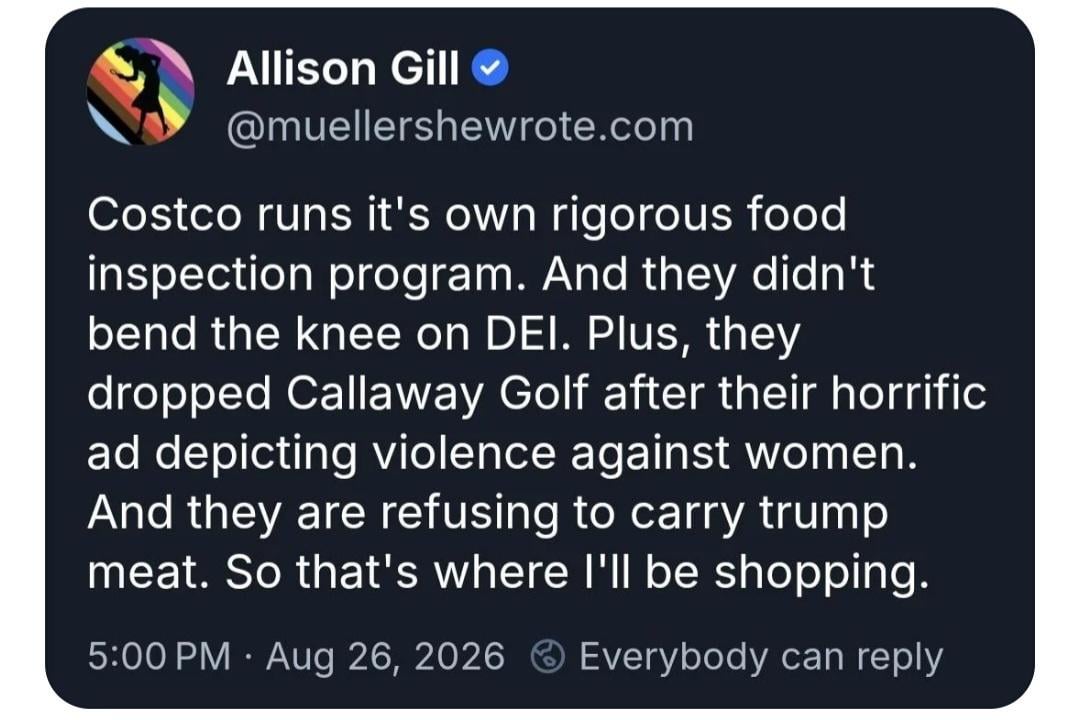
The golf club company ran an ad where a woman went to touch a golf club and her man pushed her down and threatened her for her transgression.
Costco stopped carrying their clubs in response
To be fair, it wasn’t Callaway directly. It was Good Good Golf, a golf youtube channel, that aired the ad. Callaway had a partnership with them to cobrand the golf club, but dropped Good Good immediately after the ad and canceled the branded club.
Callaway still deserves the backlash from associating with them though and apparently someone giving the ok for the ad.
Thank you for the added context. It is slightly less worse, but still bad.
Does the US not have some kind of advertising standards board that you have to get adverts approved before you’re allowed to publicly post them?
We don’t have standards keeping the ass parasites out of the lettuce, take a second and ponder
Thank god it’s just lettuce though… Right?
Only the salad eaters get the unstoppable diarrea. If you want the flesh eating worms you need to choose the beef.
If you eat both, you can let them fight it out in your gut
We generally presume companies will choose not to do that to their own reputations, but apparently that presumption was wrong.
With economies of scale you end up with basically one producer producing stuff for incredibly cheap. Take poultry for example, Tyson is like the only name you’ll see at major retailers. Even most store brands are just relabeled Tyson product. So it really doesn’t matter to them if they get a couple people sick, cause we’re else you gunna go? Blackbird farms, and pay $38 a chicken? Not the very large majority of price sensitive people living paycheck to paycheck.
Sadly it is on brand for the US. Really trying to bring back the good ole days where the white man can do whatever with impunity. Keeping women in their place, bare foot and pregnant without means.
Dude, no, this country is tragicomically fucked up!
That sounds like it would go against the First Amendment.
deleted by creator
Nope. Free speech.
Free speech just protect you from the government, gone out of the window anyway as of late.
But even when free speech wasn’t forced it wouldn’t force channels to carry your advertisement.
No, the First Amendment only protects you from the government. “Free speech” is a philosophical principle which has nothing to do with governments directly.
However, an “advertising standards board” that decides what can and cannot be posted publicly sounds pretty governmental to me.
Of course, but that still isn’t any kind of universal standards board, that’s individual channels deciding independently.
No one is boycotting the companies which showed the ad.
Imagine commenting this on a comment discussing how an entire retailer is boycotting one of the companies involved.
Yes, the company that made the ad. Unless something happened that I’m not aware of, nothing has happened to the marketing firm who made the ad nor the various companies who served the ad to audiences.
The question was phrased in a way asking if an ad platform ran it across their standards and practices to see if the ad should be aired. The ad was in poor taste, but it could be shown on network television so no one stopped it. The risk for showing a controversial ad is near zero. The only company dealing with a boycott is the company that was advertising its product.
That’s not what free speech is. Free speech doesn’t let you say whatever you want to anyone, it’s intention is to protect you while speaking out against government officials and offices. Last I checked Callaway wasn’t the 4th branch of the government, let’s not give turkey neck any ideas.
The FCC should be regulating ads like this, but this is a clown country and capitalism says domestic violence is a viable commodity to sell.
While the topic was abhorrent and in bad taste, I don’t think there was ever a time when the FCC banned jokes about spouse/family abuse.
The Honeymooners regularly joked about the husband finally breaking and beating his wife. I Love Lucy had an episode where Lucy tried to get a sunburn so Ricky wouldn’t beat her as hard for buying an expensive dress. The Simpsons had Homer choking Bart as a running gag. All these shows were on Broadcast TV.
The FCC being useless and bought off still doesn’t mean that Callaway gets special first amendment protections. They’re a corporation, they aren’t protected from consumers and retailers dropping their products for promoting crimes, or from potential lawsuits as a result of harmful marketing.
Again, this topic has nothing to do with free speech.
I bring it up because companies which broadcast and publish material are generally given greater deference by the public for showing material they disagree with. As long as the standards are adhered to evenly, the broadcaster isn’t going to be boycotted for an ad. No one is boycotting the television stations and streamers for airing this ad; all the attention is going to Calloway.
The consequences of free speech are felt by those paying for it in public opinion, not those serving it.
This post is about Costco boycotting the company who commissioned and approved the ad to represent them and their products. How would you propose costco boycotts a TV network that they have no direct ties to? You do understand costco is a retail chain that sells physical products, in physical stores. They don’t operate the TV networks or manage internet personalities and their sponsors. Short of putting out broad statements claiming NBC or Fox or whoever support domestic violence (which would open them up to slander and libel lawsuits that they’d very likely lose), I don’t know what else you’re demanding they do. They stopped doing business with Callaway by no longer promoting or offering their products.
Again, none of this has anything to do with your right to address or protest the US government. I’m starting to think you might not have ever actually read the bill of rights.
Costco is, in part, responding to public opinion on how tasteless the ads are. I’m not expecting Costco to organize a boycott of a media company for showing the ad and I’m saying they should.
What I’m saying is that NO ONE is going to organize a boycott against a company for showing an ad in bad taste, especially if the ad meets standards and practices for the FCC. They’ll go after the company paying for the advertisement.
And I’m not saying it is written in the Constitution that this protection explicitly exists. I’m saying that the culture surrounding that free speech protection gives broadcasters and publishers far less ownership of what the ads they serve say compared to other countries.
I bring it up because you asked the question about why didn’t anybody else stop this ad from being broadcast. Why? Because the risk to everyone else was near zero.
It sounds like you’re getting freedom of speech mixed up with the First Amendment. They aren’t the same thing. The First Amendment’s intention is to protect your freedom of speech from the government. If you want your freedom of speech protected from other things (such as your employer), the First Amendment won’t protect you.
No sir, no confusion here. You and I both said the same thing. Freedom of speech / free speech are the same thing in the US, a very specific legal construct under the first amendment, which many people don’t understand the boundaries of. I have a degree in this field, so I’m pretty up to speed on basic civil rights. Hence why I questioned the other user on why they think costco boycotting callaway because of a gross chud ad had anything to do with a law that deals with government overreach.
Now if the ad depicted the dude tackling Trump to the ground and threatening him for touching their underage caddy, and the FBI raided their offices in response, NOW we’d be talking about a first amendment issue as that’d be direct political commentary and an illegal response by the government.
I’m not talking about the legal construct, though. I’m talking about the philosophical principle.