This post is about Costco boycotting the company who commissioned and approved the ad to represent them and their products. How would you propose costco boycotts a TV network that they have no direct ties to? You do understand costco is a retail chain that sells physical products, in physical stores. They don’t operate the TV networks or manage internet personalities and their sponsors. Short of putting out broad statements claiming NBC or Fox or whoever support domestic violence (which would open them up to slander and libel lawsuits that they’d very likely lose), I don’t know what else you’re demanding they do. They stopped doing business with Callaway by no longer promoting or offering their products.
Again, none of this has anything to do with your right to address or protest the US government. I’m starting to think you might not have ever actually read the bill of rights.
Costco is, in part, responding to public opinion on how tasteless the ads are. I’m not expecting Costco to organize a boycott of a media company for showing the ad and I’m saying they should.
What I’m saying is that NO ONE is going to organize a boycott against a company for showing an ad in bad taste, especially if the ad meets standards and practices for the FCC. They’ll go after the company paying for the advertisement.
And I’m not saying it is written in the Constitution that this protection explicitly exists. I’m saying that the culture surrounding that free speech protection gives broadcasters and publishers far less ownership of what the ads they serve say compared to other countries.
I bring it up because you asked the question about why didn’t anybody else stop this ad from being broadcast. Why? Because the risk to everyone else was near zero.
Boycotting a private company has nothing to do with free speech. I’m also not sure what a “culture of free speech” is. Free speech in the US is a specific set of constitutional laws. If you’re talking about philosophical “free” speech, that’s an entirely different topic and not legally bound or functional, so pretty irrelevant to this topic.
I never asked you or anyone else anything about this ad or what is being done about it, what are you talking about? At this point I’m assuming I’m likely arguing with an LLM from all of the bizarre irrelevant points and hallucations being made.
Well, I feel like I’m trying to explain my logic in how it is linked and you keep resetting each time to the beginning without processing what I’ve said.
You don’t seem to want to understand and you’re hyperfixating on a few words and ignoring the other parts of the argument I’m making.

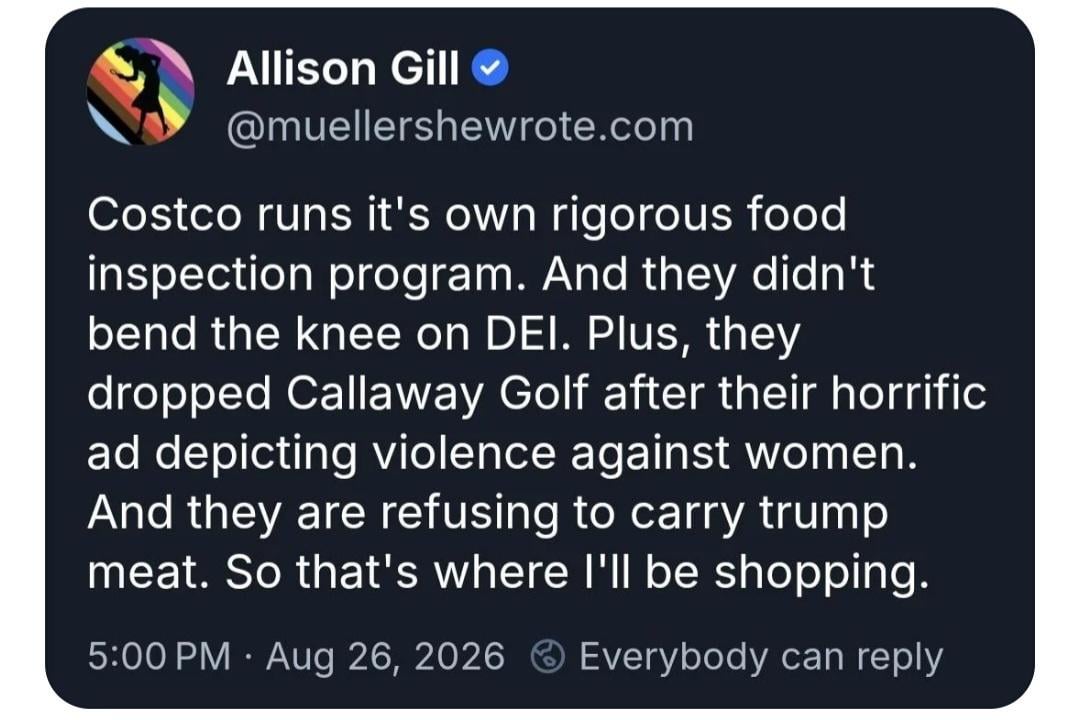
This post is about Costco boycotting the company who commissioned and approved the ad to represent them and their products. How would you propose costco boycotts a TV network that they have no direct ties to? You do understand costco is a retail chain that sells physical products, in physical stores. They don’t operate the TV networks or manage internet personalities and their sponsors. Short of putting out broad statements claiming NBC or Fox or whoever support domestic violence (which would open them up to slander and libel lawsuits that they’d very likely lose), I don’t know what else you’re demanding they do. They stopped doing business with Callaway by no longer promoting or offering their products.
Again, none of this has anything to do with your right to address or protest the US government. I’m starting to think you might not have ever actually read the bill of rights.
Costco is, in part, responding to public opinion on how tasteless the ads are. I’m not expecting Costco to organize a boycott of a media company for showing the ad and I’m saying they should.
What I’m saying is that NO ONE is going to organize a boycott against a company for showing an ad in bad taste, especially if the ad meets standards and practices for the FCC. They’ll go after the company paying for the advertisement.
And I’m not saying it is written in the Constitution that this protection explicitly exists. I’m saying that the culture surrounding that free speech protection gives broadcasters and publishers far less ownership of what the ads they serve say compared to other countries.
I bring it up because you asked the question about why didn’t anybody else stop this ad from being broadcast. Why? Because the risk to everyone else was near zero.
Boycotting a private company has nothing to do with free speech. I’m also not sure what a “culture of free speech” is. Free speech in the US is a specific set of constitutional laws. If you’re talking about philosophical “free” speech, that’s an entirely different topic and not legally bound or functional, so pretty irrelevant to this topic.
I never asked you or anyone else anything about this ad or what is being done about it, what are you talking about? At this point I’m assuming I’m likely arguing with an LLM from all of the bizarre irrelevant points and hallucations being made.
Well, I feel like I’m trying to explain my logic in how it is linked and you keep resetting each time to the beginning without processing what I’ve said.
You don’t seem to want to understand and you’re hyperfixating on a few words and ignoring the other parts of the argument I’m making.