There’s been a couple court cases (that I know of / at least), and one judge was accepting on the argument that model training was a “fair use” while the other was not. I think both of those rulings came down prior to the publication of the U.S. Copyright Office guidelines.
Also, I’m not 100% sure that the U.S. Copyright Office is an authority here. The DOJ and/or Federal judiciary would have the authority to interpret the copyright laws: The DOJ to decide to prosecute, and the judiciary to make binding rulings and/or advise juries. I’m sure both the DOJ and the judiciary will give a lot of weight to the guidelines, but the guidelines aren’t actually the law.
In any case, you can read the guidelines and make your own decisions: https://www.copyright.gov/ai/ Part 3 is about training, and I think the damning bits are III, B and D. Part 2 is about outputs, and I think the damning bits are II, B and D.2. (My summaries: 1. Training infringes 2. Outputs that are substantially similar infringe 3. models get no copyright 4. prompts are NOT ‘human creative effort’ and thus are insufficient to establish copyright 5. human creative effort still gets copyright protections, even when generative AI is used as a tool in the creative process.)
It is likely that commercial generative AI is in violation of a lot of copyrights, yes. Research projects are fair use, but only as long as they stay research projects.


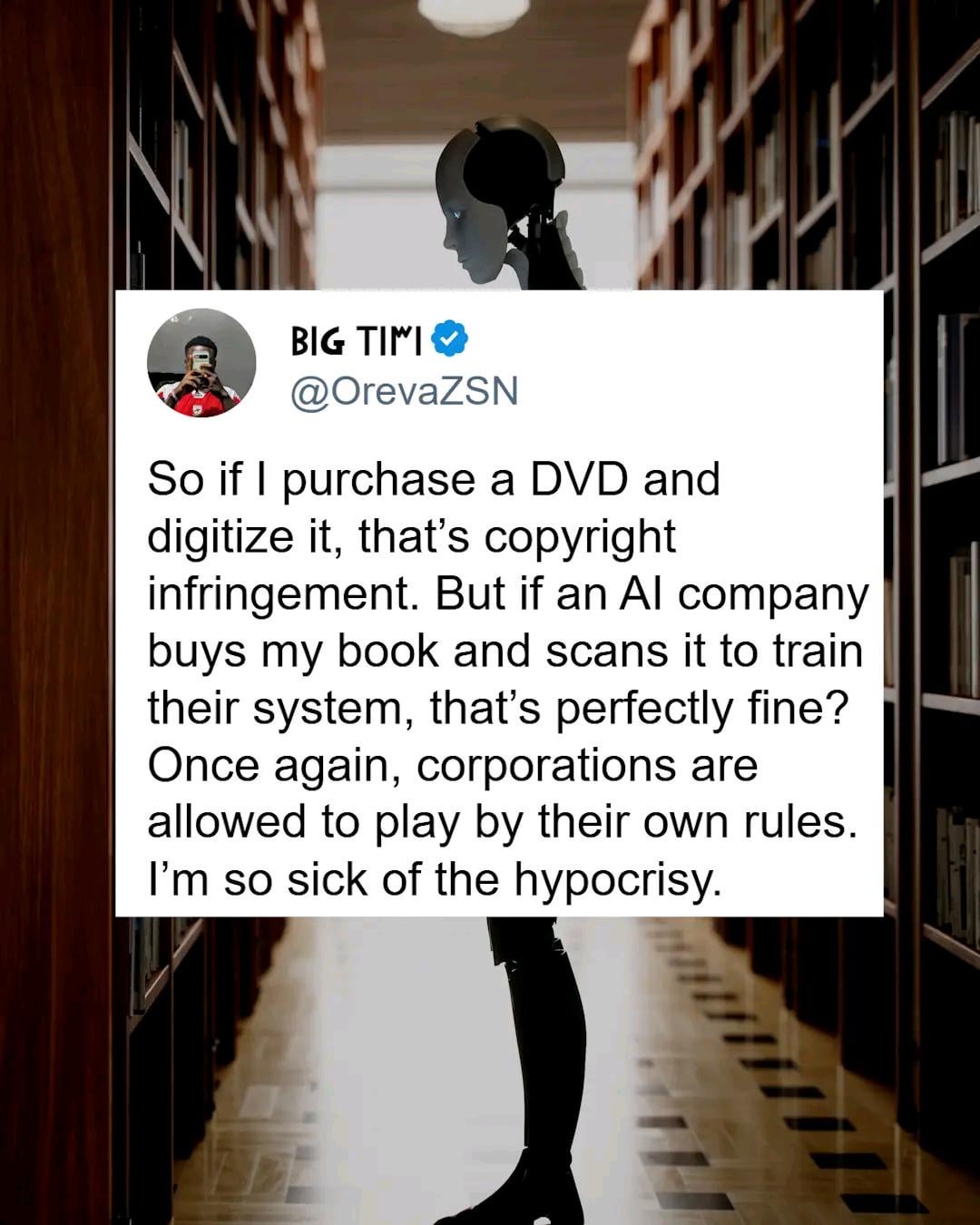
There’s been a couple court cases (that I know of / at least), and one judge was accepting on the argument that model training was a “fair use” while the other was not. I think both of those rulings came down prior to the publication of the U.S. Copyright Office guidelines.
Also, I’m not 100% sure that the U.S. Copyright Office is an authority here. The DOJ and/or Federal judiciary would have the authority to interpret the copyright laws: The DOJ to decide to prosecute, and the judiciary to make binding rulings and/or advise juries. I’m sure both the DOJ and the judiciary will give a lot of weight to the guidelines, but the guidelines aren’t actually the law.
In any case, you can read the guidelines and make your own decisions: https://www.copyright.gov/ai/ Part 3 is about training, and I think the damning bits are III, B and D. Part 2 is about outputs, and I think the damning bits are II, B and D.2. (My summaries: 1. Training infringes 2. Outputs that are substantially similar infringe 3. models get no copyright 4. prompts are NOT ‘human creative effort’ and thus are insufficient to establish copyright 5. human creative effort still gets copyright protections, even when generative AI is used as a tool in the creative process.)
It is likely that commercial generative AI is in violation of a lot of copyrights, yes. Research projects are fair use, but only as long as they stay research projects.