- 98 Posts
- 44 Comments

 1·22 hours ago
Will Kenya’s revenue streams - such as those gained from the country’s exports and other unrelated income - be used as collateral for the Chinese debt as it is usually the case with Chinese loans?
If interested:
As security, they [Chinese lenders] use liquid, easily accessible assets, such as cash in bank accounts located in China. They rarely take infrastructure project assets as collateral, but often rely for repayment on established commodity revenue streams unrelated to the project. Typically, EMDE governments and state-owned enterprises commit to route foreign currency proceeds from commodity sales through bank accounts controlled by the lender. The cash balances in these accounts can be very large; in low-income, commodity-exporting countries, they average more than 20% of annual PPG debt service to all external creditors.
Good. Now they should go for BYD, too.
Pivot?
India has been the second-largest buyer of Russian crude behind China since the Kremlin decided to invade Ukraine.
Before the war in 2021, Indian imports of Russian crude were around USD 1-2 billion annually, according to Comtrade, Now it’s above 50 billion.
I agree as here it also seems to be bureaucracy and a lack of funding.
The trigger for introducing the rule was an incident the previous weekend. Nobel - himself a qualified lifeguard - had to rescue a toddler from water that was far too deep. “Our lake is up to 13 metres deep in places. That is simply dangerous,” [Mathias Nobel, manager of the Heidebad lake swimming area] said. What is feasible and what is not?
Nobel said children in particular needed to understand how to behave around water and had to be supervised by people who also knew how to act. Lifeguards also needed to be able to communicate with visitors directly. If a group arrived without a single person with sufficient German, he and his team had serious concerns, he said.
Maybe they need more personnel.
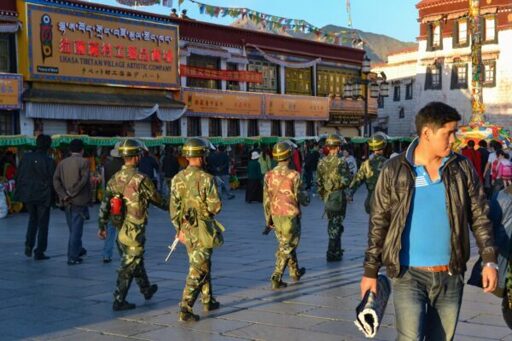
The United Nations Human Rights Office has reiterated its concerns over what it describes as “severe” human rights violations against the Uyghur population in Xinjiang, also known as East Turkestan, despite ongoing international scrutiny of the region.

On April 27, one day after a government press release endorsed RightsCon, we received a phone call from MoTS about an urgent issue and were told that diplomats from the People’s Republic of China (PRC) were putting pressure on the Government of Zambia because Taiwanese civil society participants were planning to join us in person.

Report does not say how much would be allocated, nor what types of projects would be supported.
Yeah, and every time China wants to cancel a human rights event in Zambia, the Zambian government is vulnerable for political coercion and must bow to Beijing.
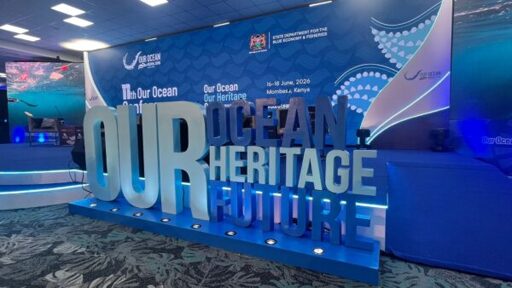
The same is true for Kenya, btw: Taiwan accuses Kenya of deporting conference delegates on China’s behalf

Yes, and not to forget that China needs African and other countries in the Global South to reshape existing global institutions and norms, including the weakening of human rights, though this, as one article reads, can often be at odds with African citizen interests:
African NGO coalitions are increasingly locking horns with their own governments and Chinese diplomats during crucial votes, especially at the UN Human Rights Council. The key messages these non-state actors are sending is that African governments’ strategic engagements with China should not violate core African principles, norms, and commitments to citizens. There is a tendency to paint these as “Western concerns.” The truth is Africans codified them in their struggles for independence.
China, which is also funded the African Union (AU)‘s headquarters, plunders minerals from Africa as African trade deficit with China grows. It is also China that benefits from Africa’s minerals, while mining activities by China-owned companies in Africa have a devastating impact on the environment. Also, African countries’ debt to China have been growing immensely over the years. Beijing uses this for economic and political coercion.
China also needs the Global South to isolate Taiwan. We have seen this, for example, just a few weeks ago, when China put pressure on the Government of Zambia because Taiwanese civil society participants were planning to join the RightsCon, a human rights summit that was planned to be hosted in Zambia. In the end, the Zambian government showed they have no spine and gave in, cancelling the event just a week before it was planned to take place.
OP is a Chinese propaganda bot. They are permanently spreading pro-China content, often with not much more than the headline and weak content.
“Nepal faces a huge trade deficit with China,” Nepal’s foreign minister said.
It’s the same pattern everywhere.
According to related report, Nepal reaffirms ‘One China’ policy as China raises concerns over Western influence, it says,
Nepal’s adherence to the “One China” policy—which explicitly designates Tibetan affairs as China’s internal matter—has severely constrained the rights and safety of Tibetans living in Nepal. Driven by Beijing’s economic and security pressures, the Nepali government has suppressed the Tibetan community’s civil, cultural, and political freedoms.
Under strict conditions prohibiting “anti-China” activities, Nepal routinely detains Tibetans who stage peaceful protests, particularly during high-level Chinese diplomatic visits or around sensitive anniversaries like the Dalai Lama’s birthday. The community faces heavy surveillance by security forces. Tibetans are largely prevented from celebrating traditional cultural festivals, including the Tibetan New Year, or openly displaying images of His Holiness the Dalai Lama.
This is political coercion and economic cooperation that benefits only China as usual.



I didn’t watch the video. Are there any numbers how many students studied in Cuba? This seems to be more propaganda than a news.
This is outright disinformation apparently aimed to distract from China’s bad faith actions and has nothing to do with the topic.
This makes neither sense nor is it fair, and it is done in bad faith. The Chinese government has been cooking the books for its trade and economic stats for a long time (just look how Beijing changed the way at the start of the pandemic how they ‘measure’ the country’s trade, for example), and so it does with climate actions. Next year, Chinese propagandists will report how gloriously they are fighting climate change, while falsely accusing independent scientist of being biased who prove that China’s climate actions are highly insufficient.
[Edit for clarity.]
The personnel changes reflect a push to bring patriotic outside talent into policymaking …
 11·20 days ago
… Blackrock CEO Points to Pensions and Retirement Savings
So he wants to copy China’s playbook?
 53·20 days ago
… Blackrock CEO Points to Pensions and Retirement Savings
So he wants to copy China’s playbook?
… Blackrock CEO Points to Pensions and Retirement Savings
So he wants to copy China’s playbook?
Can’t read the article as it’s paywalled. But the headline alone fits OP’s desired propaganda narrative, no content needed.
China’s New “Ethnic Unity Law” Codifies Genocide, as one right group says.
It’s the law of the jungle with Chinese characteristics.