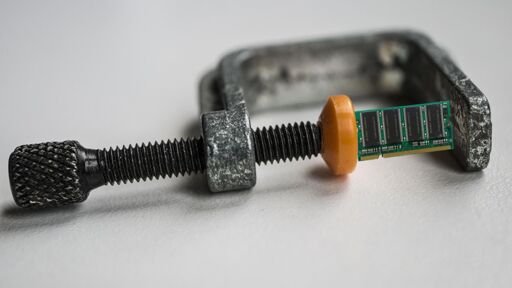
“Cram” is such a funny acronym for this
Personally I just download more RAM whenever I need it.
CRAM was conceptualized by Gregory Price and his team at Meta.
Implemented on Linux because that’s where it works, but closed source, so they’ll use it on their own hardware alone? I guess this is just an interesting thing, but nothing anyone will benefit from but Zuckerberg, since he owns it.
Where did you see this will be closed source? I can’t find any reference.
or more accurately lets assume meta doesn’t share it… doesn’t it just prove the possibility? Opening the door for a similar tech to be made open source?
If I remember correctly, isn’t meta the creator of several significant open source software projects, including zstd?
Yeah but my point is, conceptually, if we have a general concept of compressing things in memory… I’d imagine there’s enough people that could as well.
Not saying anything with regards to the odds of meta releasing it, or keeping it to themselves. I’d imagine it’s a matter of business. If their goal is to get ahead in the datacenter race, that might be a key worth holding on to for a while, or maybe they think that it will render shitty phones able to keep viewing facebook longer so it’s worth releasing to the public early. Point I was going at is simply the tech exists, it should be possible to replicate it by someone who isn’t as profit driven.
If you were like me and jumped straight past the headline to hoping this would somehow magically expand your RAM in these times of darkness… it won’t.
Unless I’m reading wrong this is essentially a program from Meta engineers designed to replace zram and zswap and make them faster. It will not give you more free memory - in fact, this uses RAM instead of hard disk swap space so is most likely going to utilize additional ram.
Sigh.
If you’re already on a distro that uses zram/zswap in lieu of disk swap, this sounds like a vast improvement over them by just removing the overhead of treating those things like a disk swap.
Since I’m on Fedora, I’m looking forward to this rolling out.
No, it compresses data in RAM, so whatever you have in ram takes up less space there.
The entire article and all slides talk about faster decompression speeds using CRAM, at no point does it reference greater compression ratios. It also references using RAM instead of swap space (hard disk) to increase speeds.
Can you point out where you’re getting your info from?
Nice