

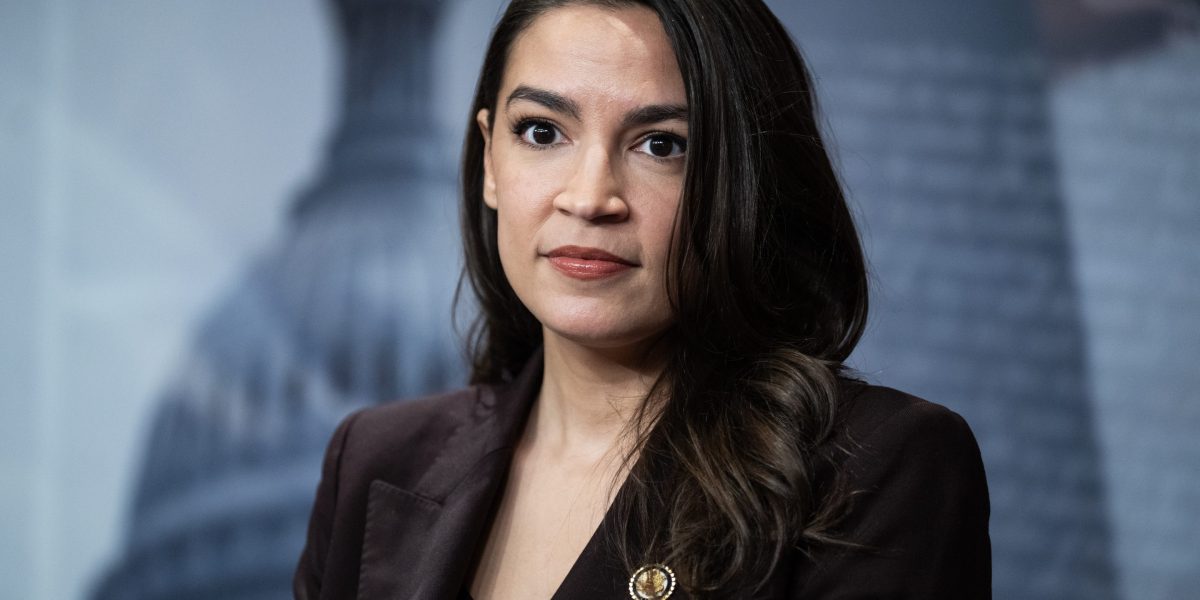
Baby boomers comprised a larger share of voters in 2024, accounting for 32%, but they are trending lower after hitting a peak of 36% in 2016.
Ocasio-Cortez, a millennial herself, expects the younger generation will soon tip the scales in American politics.
“Millennials are not punk kids anymore. We’re grown adults with mortgages and kids,” she said. “And we—that generation is starting to be decisive at the polls. And there is anger at being ignored, sidelined, having our economic futures mortgaged by the generations that came before us on everything from the economy to climate. And we’re taking the reins.”
From global warming to debt crisis to lack of affordable health insurance (all intentional), Boomers have definitely overstayed their welcome.
I’ve heard that and, more importantly, I believe that’s the feeling behind many young people now leaning conservative.
I guess it depends on how we define “counterculture”. Is it only to be defiant of something currently in existence? Does this defiance need to be against a majority (and how big may be another question)? Or, as the other user implied, counterculture means to go against not the trends but against the ideas and norms of people and institutions not only in power but also with powers?
I’ll try to explain myself. If it is going “against”, I guess it all can become counterculture depending on the angle. Tradwives are countercultural from a goth perspective (I guess that’s mine); goth is countercultural from the tradwife’s perspective. But that’s not very useful and I’m sure it would be if no use to have this word meaning simply this.
So… Maybe it means to go against something bigger. But what is big? The number of people? The power? (E.g. Elon Musk is only one guy, but he has a lot of influence and therefore power). The acceptable moralities? The traditions? The norms, laws, rules?
And notice how different groups may occupy different aspects I mentioned. Leftists are a majority in some places (Lemmy, California, maybe Berlin). But even in those places, power is with the billionaires and other elite groups (which are often not leftists). The acceptable morality in those places is centrist, leftist (gay rights and things like that). Traditions, though, can be very mixed with rainbow parades and churches existing together. Well, the equivalent here on Lemmy. Norms, laws, rules are also mixed, but as the user said, they lean right in places like work, banks, parks, schools, etc.
So… if I go against the billionaires, their far-right legions, am I going against power and against laws and norms and may I get in trouble? Yes. In other words, I’m going against a culture.
Are conservatives going against a culture when they rebel against some governments and their progressive laws, against an accepted morality, etc.? I guess so.
But we are back at the relative perspective, just with extra steps, with words like “power” and “influence” involved. “Countercultural”, if it’s not relative, then implies that there is ONE dominant culture. But if, as we saw with California and maybe Berlin and such places, there is always a mixed bag, what is that mysterious dominant culture?
An answer we could give is that the dominant culture is that which would get into power, into everything, if other groups didn’t resist against it. Ideologically, this mental experiment leaves us the same. All the ideas are clashing and, without a clash, they would expand. They’re ideas! But materially, this changes. If we consider how we get to see billboards with messages, books printed in a book store, work laws, etc. Money is key. We don’t live only in a world of ideas (I wish), we live in the real world with money, transactions, etc. If we’d let the world just run… Well, money is held by people that don’t want to let go of that money. Money then would be expended in the ideas that favor that state of things (status quo). Money would pay for governments that taxed the rich a little bit less; money would pay for a little bit of segregation if possible, because poor people tend to be undesirable in some contexts; money would pay for the rights and preferences of the people with that money, it’s natural. And the thing is that, without resistance, well, poor people’s opinions and preferences would be overshadowed. I guess sometimes it is like this. At least in my country, we had periods like this.
So, to me, it seems that the dominant culture is the one that would default to dominance by the material conditions. Ideologically, I guess we’ll always feel in many different ways, we’ll be diverse. But which books are published and how many hours the workers work is a matter of who has the power to ultimately decide. In this system we are living in, the rich and powerful have this ultimate decision. Intellectuals and workers and other groups need to resist and fight and debate their ways in this system. From climate change to four days of work instead of five (which ironically it doesn’t even reduces money for the rich, but they were afraid it did), it all has to be fought. I see here the counterculture; I see there the dominant culture.
Edit: By extension, things that favor the rich-elite I see as dominant culture; things that serve the masses and the dissident groups, I see as counterculture, even if at some periods of time or places they’re winning or they’re a lot (like California or Berlin again, haha).
The end of my opinion. Sorry you had to read this much. I know I may not change your mind, don’t worry, but I think it is important to keep our sense of integration; I mean, that we do not reject our fellow human beings right away because of these differences. You’re here talking to me and it’s only fair that I share with you my current views and feelings.
The TL;DR is you see what you see as counter culter, I see what I see as counter culture.
Again - we love to think of ourselves as exceptions/not like others. It feels nice and it is nice when others notice our uniqueness.
Yes, we agree to disagree. Except I don’t think all the people are motivated by ego, or maybe we all are motivated by ego but at different degrees. I am weird and that has been hard (bullying and stuff). So I like some uniqueness and rebelliousness, but I would also like to be… one of the people, a person with a tribe. So it might be my second adolescence with orangey-pink hair (real edgy, huh?), but it can also be genuine conviction that I’m trying to spread a call for “freedom!”, haha, as silly as that sounds.
Thank you for reading.