

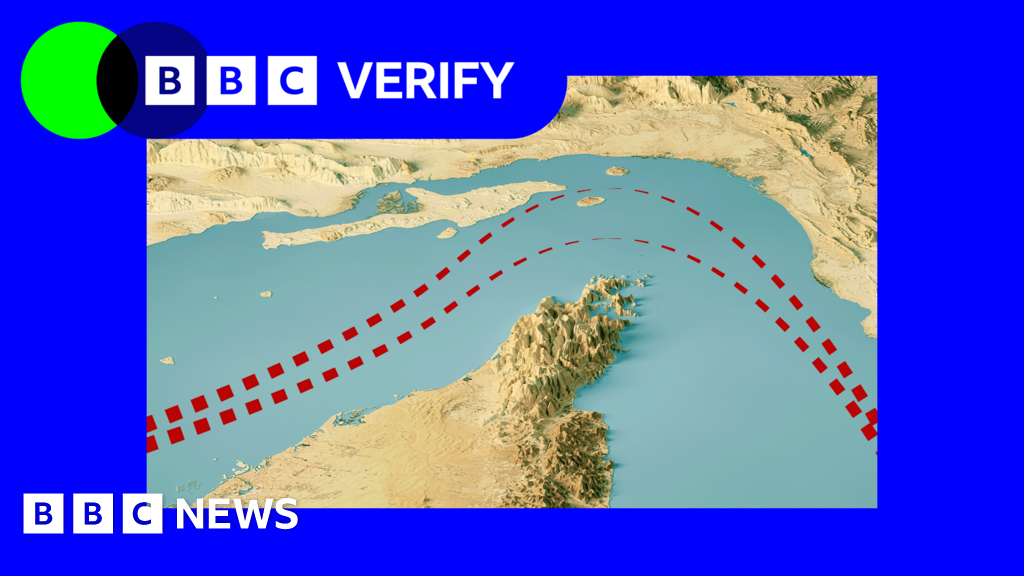
The Strait of Hormuz has become a focal point of the US-Israel war with Iran after Tehran effectively choked off one of the world’s most important shipping lanes, carrying about a fifth of the world’s oil and liquefied natural gas.
A two-week ceasefire was agreed on Tuesday evening on the condition that “safe passage” through the strait is guaranteed - but BBC Verify analysis shows only a few vessels have since crossed.
The disruption, over the past five weeks, has sent shock waves across the world economy, pushing up energy prices and exposing just how reliant international supply chains are on the strait, which is only about 33km (21 miles) wide at its narrowest point.
As well as energy, the Gulf is also vital for transporting chemicals needed to process products like microchips, pharmaceuticals and fertiliser.
Probably because the ceasefire was immediately violated
feels so weird reading a news article thats already outdated couple hours later…
Yah Iran’s already closed it. Lasted longer then I thought it would.
Should we just convert to a Trump Cease Fire metric (TCF for short) instead of Scaramucci’s now?
